


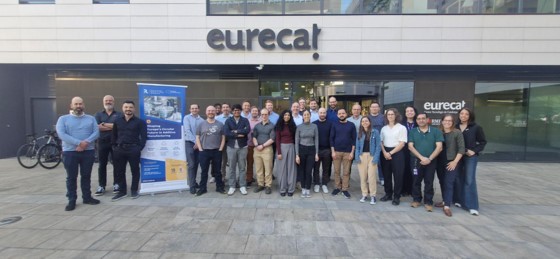
REPAM held its 5th Consortium Meeting, also its 5th General Assembly, on 27–28 October 2026 in Barcelona and Manresa, Spain, hosted by project partner Eurecat. The two-day meeting brought the REPAM consortium together to review progress, discuss the links between the project’s technical activities and agree on priorities for the coming months.
The meeting took place in the second half of the project. REPAM started in October 2024 and will run until September 2027. In this phase, the project’s activities are moving from developing materials and processes towards applying them in industrial use cases and assessing their environmental and social impact.
Day 1: Reviewing progress across REPAM
The first day, at Eurecat Barcelona, opened with an overview of the project status. The overview also covered REPAM’s approach to public engagement, including publications, conference participation, workshops and training, and the management of the data generated within the project.
Partners then reviewed the progress of REPAM’s work packages. The sessions covered the processing of metal powder and wire feedstock and the evaluation of additive manufacturing processes. A dedicated session presented REPAM’s recycling routes, which include turning titanium machining chips into wire, reconditioning used powders, producing new feedstock from scrap, and recovering material directly from used parts. Together, these routes reflect REPAM’s aim of keeping valuable metals in the additive manufacturing value chain instead of treating them as waste.
The programme also covered REPAM’s three industrial use cases. They address aluminium components for aerospace, titanium components for automotive applications and copper components for electronics. These three sectors work with very different production volumes, from small batches in aerospace to high throughput in electronics, which allows REPAM to examine resource-efficient additive manufacturing across a wide range of industrial needs.
A session on life-cycle assessment presented the environmental and social assessment work under way for the copper, titanium and aluminium value chains. This work will help REPAM compare the impacts of additive manufacturing routes with those of conventional manufacturing.
The communication and dissemination session addressed the activities planned for the second half of the project. The first day closed with a general discussion on cross-cutting topics.
Day 2: Lab visit and parallel sessions in Manresa
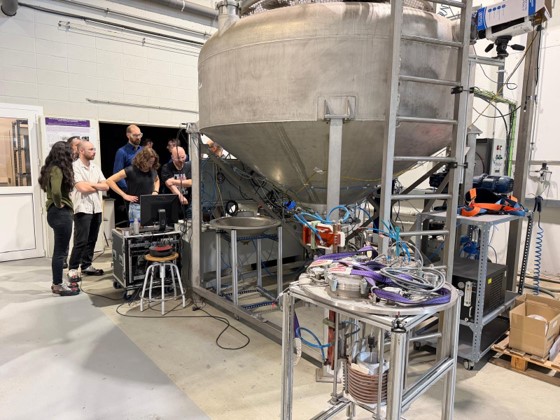
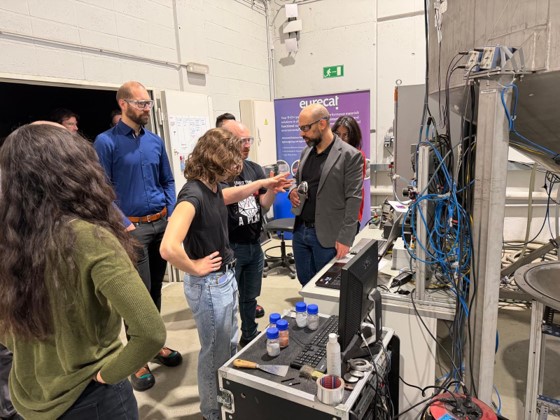
On the second day, REPAM partners travelled to Eurecat’s Manresa site to visit its laboratories. Partners then split into two parallel sessions, one on feedstock and one on manufacturing, to work on the connections between the different work packages. The meeting ended with a general discussion and a wrap-up of the next steps.
Next steps
Following the meeting, REPAM partners will continue their work on recycling and reconditioning routes, additive manufacturing processes and the industrial use cases, with the communication and dissemination activities planned for the second half of the project running alongside.
REPAM (Resource Efficient Materials for Additive Manufacturing) is a Horizon Europe project bringing together 19 partners from across Europe, including universities, research institutes and industrial companies. The project aims to reduce material waste in metal additive manufacturing by keeping valuable metals in use across the value chain.
This project has received funding from the European Union’s Horizon Europe research and innovation programme under Grant Agreement No. 101178659.